
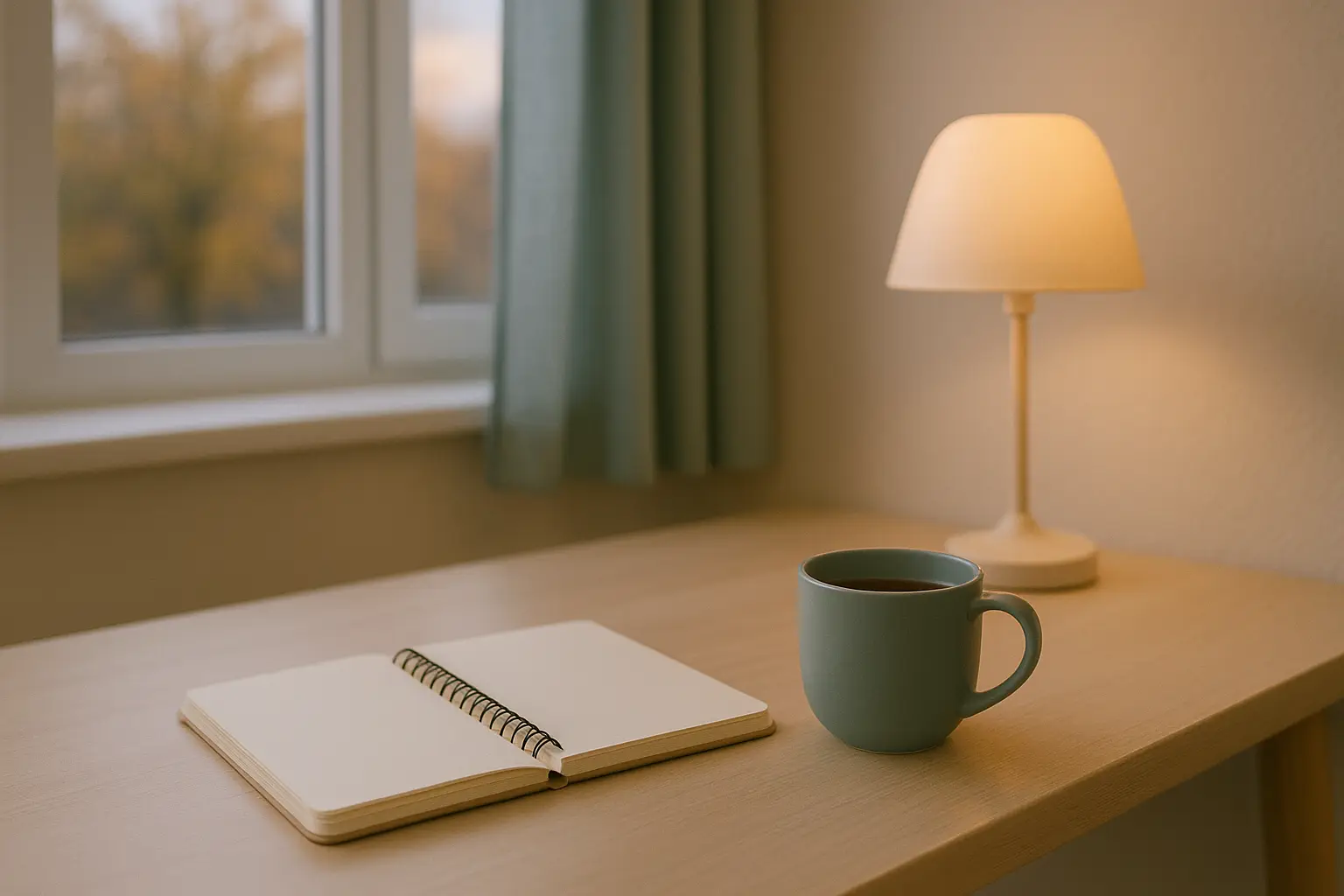
As autumn settles and evenings arrive earlier, back-to-school stress can quietly turn into November workload overwhelm. If your teen’s mood feels flatter after sunset or homework battles spike, you’re not alone. This parent guide offers a November routine reset—using evening light, simple coping skills, and gentle structure—to support teen mental health and a steadier family rhythm.
We’ll keep it practical: short checklists, CBT-style thought reframes (in everyday language), sleep-friendly cues, and a micro gratitude practice. Our goal isn’t perfection; it’s small, repeatable steps that help mood across November.
Why November can feel heavy for teens
Shorter daylight and rising assignments change energy and focus. The body clock (circadian rhythm) is light-sensitive, so less afternoon light can nudge sleep later and make evenings feel tougher. Add sports, projects, and social shifts, and you get common signs of workload overwhelm.
Quick signs to watch (not a diagnosis)
- ●Homework avoidance or late starts most nights
- ●Big swings in motivation, low mood after sunset, or irritability
- ●Difficulty waking, weekend “catch-up” sleep creeping longer
- ●Headaches, scrolling more than usual during study time
Pro tip: Notice patterns for a week before overhauling routines. A few small changes often beat big resets.
A 20‑minute November Evening Reset (parents + teens)
Try this Sunday–Thursday. Keep it light and flexible.
- ●Two-minute daylight top‑up (before dinner)
- ●Step outside or by a bright window for 2–5 minutes. Natural light late afternoon helps anchor sleep and focus later.
- ●Calm‑start minute before homework
- ●Sit together and do one slow breathing cycle to settle the nervous system.
How: Inhale 4, hold 4, exhale 4, hold 4. Repeat 2–3 rounds.
- ●Homework rhythm (three steps, ~15–25 minutes)
- ●Plan: List 1–3 tasks. Circle the “one thing” that moves the night forward.
- ●Focus: 20–25 minutes with phone in another room; soft lamp plus overhead light.
- ●Reset: 3–5 minutes—stretch, water, quick check‑in. Then either repeat once or stop if the “one thing” is done.
- ●Light hygiene after 8 p.m.
- ●Dim overheads; keep a warm desk lamp for any remaining work.
- ●If screens are needed, use night shift and lower brightness. Aim to power down 30–60 minutes before bed.
Checklist for parents
- ●Create a clear work spot (even a tray table) so setup is fast.
- ●Agree on a phone “parking place” during focus blocks.
- ●Offer a snack with protein + carbs before study starts.
Quick CBT‑style reframes (in plain language)
Gently model these; invite your teen to try their own version.
- ●From “It’s too much; I’ll never finish” to “I can start one thing for 20 minutes and see.”
- ●From “I’m bad at this” to “I’m still learning; what’s one step I understand?”
- ●From “Everyone else is fine” to “People don’t post their messy middle. I can ask for help.”
- ●From “I blew it yesterday” to “Today is a fresh rep.”
Tip: Write a favorite reframe on a sticky note near the desk.
Coping skills for busy weeks: the stress bucket
Think of stress like water filling a bucket. Demands pour in; coping skills poke holes so water can drain. When the level rises, add a small drain—don’t wait for overflow.
Add drains this week
- ●Body: short walk after dinner, shoulder rolls, 30–60 seconds of wall push‑ups.
- ●Mind: 3 slow breaths before opening a tough assignment; name the feeling (“nervous,” “stuck”).
- ●Social: 5 minutes of help from a parent or study buddy; ask a teacher one clarifying question.
Block inflow a bit
- ●Simplify one commitment temporarily this week.
- ●Cap late‑night scrolling by moving the charger out of the bedroom.
A tiny gratitude practice that actually fits
Right after homework, share or jot two lines:
- ●One thing that helped today (even small, like “sat by the window”).
- ●One person or moment you appreciated. This isn’t about forced positivity; it trains attention to spots of support, which buffers mood over time.
Light and sleep: small tweaks, big payoff
- ●Catch outdoor light for 5–10 minutes before noon when possible; it steadies energy.
- ●Keep a consistent wake time (within ~1 hour) even on weekends.
- ●Build a 20–30 minute wind‑down: shower, book, low light. If thoughts race, write a quick “tomorrow list.”
When extra help can make things easier
Consider checking in with a school counselor, pediatrician, or a licensed therapist if your teen’s distress or school avoidance keeps rising for 2+ weeks, or sleep and appetite are very disrupted. Support is a strength move; an early conversation can prevent bigger tangles later.
Feature Spotlight: AIary
AIary is a gentle, privacy‑first companion for you and your teen. Use the Conversational Diary to unload the day in plain language, and get Mood Analysis that highlights patterns like evening dips or workload spikes. Try short Guided Exercises—breathing, grounding, and thought reframes—right inside the chat. Journaling Reminders keep the habit simple, while data stays yours with our privacy‑first design. If things feel off in autumn, AIary helps you notice, adjust, and feel steadier without judgment. Download on iOS and Android to start a calmer routine.
Quick parent checklist for November
- ●Two-minute daylight top‑up before dinner
- ●One calm‑start breath cycle together
- ●1–3 task list with a circled “one thing”
- ●Phone parked away during 20–25 minute focus blocks
- ●Dim lights after 8 p.m.; screens on night shift
- ●Two‑line gratitude wrap‑up
You’ve got this. November doesn’t need a full makeover—just a few well‑placed cues. Try the reset tonight, and see how your teen’s mood and momentum shift over the week.
—
If you or your teen are in immediate distress or concerned about safety, seek local emergency help right away and visit /crisis-resources for support options in your region.